Weather and what to wear
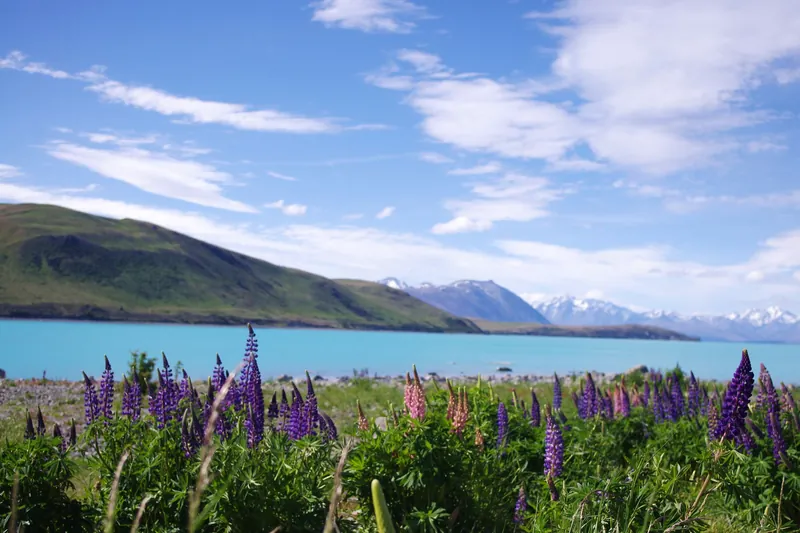
Mount Cook Village gets more than 4,000 mm of rain a year, while Lake Tekapo, about 100 km away, is one of the sunniest places in New Zealand. Pack for both, and for cold at any time of year.
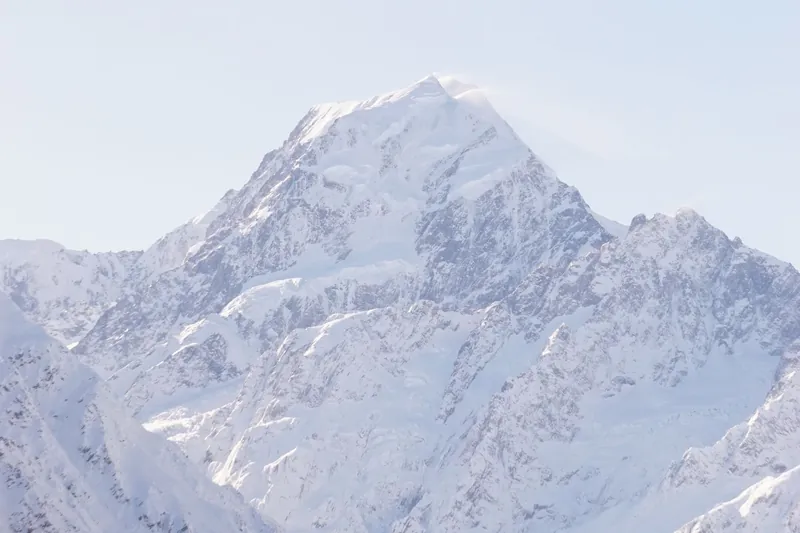
Two very different climates meet around Aoraki/Mount Cook. The village lies at the foot of the highest peaks of the Southern Alps, while NIWA counts the inland basins of the Mackenzie Country among the driest areas of New Zealand. The climate figures show the gap: Mount Cook Village averages about 4,100 mm of rain a year, Lake Tekapo about 535 mm. DOC sums up the rest in one line that applies here more than almost anywhere: New Zealand's weather changes rapidly, and it can be very cold at any time of the year.
Temperatures through the year
The two stations sit at similar heights, so their temperatures are close. Tekapo has slightly warmer summer afternoons and colder winter nights. The table shows the NIWA averages for 1991 to 2020.
| Month | Village high | Village low | Tekapo high | Tekapo low |
|---|---|---|---|---|
| January | 20.4 | 8.7 | 22.2 | 8.5 |
| February | 20.8 | 8.5 | 22.2 | 8.2 |
| March | 18.4 | 6.5 | 19.5 | 6.0 |
| April | 14.9 | 4.0 | 15.3 | 3.5 |
| May | 11.0 | 1.3 | 11.5 | 1.4 |
| June | 7.9 | −1.4 | 7.4 | −1.9 |
| July | 7.2 | −2.2 | 6.6 | −2.8 |
| August | 9.1 | −0.8 | 8.8 | −1.2 |
| September | 11.8 | 1.5 | 12.4 | 1.0 |
| October | 14.0 | 3.1 | 15.2 | 2.8 |
| November | 16.3 | 5.0 | 17.3 | 4.5 |
| December | 18.5 | 7.0 | 20.1 | 6.8 |
Averages hide the extremes. NIWA has recorded 32.8 °C and −13.9 °C in the village and counts around 98 frost days and 24 days with snow a year. On 6 August 2026 Mount Cook Airport was the coldest place in New Zealand at −10 °C. In winter, warm northwesterly foehn winds can also bring an unseasonably mild day between the cold spells.
Rain, and how much of it
In the village it rains on around 14 days a month on average, with little difference between seasons. December is the wettest month at close to 500 mm in the 1981 to 2010 records, February and July the driest at around 260 mm. Single storms can be extreme: in December 1995 the village recorded 515 mm in 72 hours. Lake Tekapo, by contrast, sees six to nine rain days a month, and NIWA lists it among the five sunniest places in the country in many years.
For planning, this means some rain during a stay of a few days is likely. It also means flights and glacier landings are often moved at short notice, which is why the best time to visit page suggests leaving a spare day.
What to wear on the tracks
DOC's Land Safety Code asks walkers to pack warm clothes and extra food and to be ready for bad weather and an unexpected night out. On the Hooker Valley Track, Kea Point and the Tasman Glacier View, that translates into sturdy shoes with grip, a waterproof jacket, a warm mid-layer, hat and gloves, even when the morning looks clear. The glacial lakes at the end of the Hooker and Tasman valleys are about 3 °C and can cause hypothermia quickly, so stay out of the water and off the icebergs.
In winter, DOC recommends microspikes and walking poles for the Hooker Valley Track, whose shaded sections become very icy. On the Sealy Tarns steps, ice axe and crampons may be needed. There are no shops in the village and the nearest pharmacy is about 70 km away, so bring what you need, including sunscreen and any medication.

Sun and UV
SunSmart rates UV radiation as damaging from September to April, and in the mountains and around snow and ice all year round. A glacier landing puts you on snow and ice at any time of year. Sunglasses, a hat and sunscreen belong in the bag in every season.
Clothing on tours
Some operators lend gear. On the heli-hike to the Tasman Glacier, boots, wool socks, crampons, a walking pole and a waterproof jacket are included, and you bring warm clothing, sunglasses and a hat. The Tekapo day shuttle supplies snow spikes when the track is snowy. For scenic flights, Mount Cook Ski Planes and Helicopters does not allow bags on board, so wear your layers rather than carrying them.
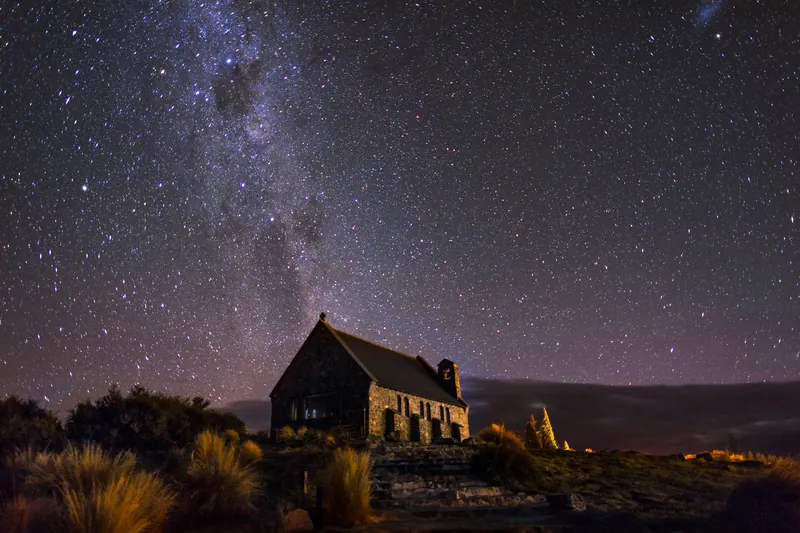
Stargazing needs the warmest clothes of the trip. The operator by the Tekapo River warns that nights at Tekapo can get very cold in any season. The Mount John summit tour provides an extreme cold-weather jacket, while the crater tour at Cowan's Observatory asks you to bring warm clothing, a hat and a scarf. Details of each tour are on the stargazing page.
Checking the forecast
MetService publishes brief and extended mountain forecasts, and NIWA offers forecasts for huts in the park, including Mueller Hut and Tasman Saddle Hut. The DOC visitor centre in the village has the latest track and weather information and is open every day. Before any trip above the valley floor, DOC also asks you to check severe weather warnings and the avalanche advisory.
Questions travellers ask
How cold does it get at Mount Cook?
July averages a high of 7.2 °C and a low of −2.2 °C in the village, and NIWA records a lowest temperature of −13.9 °C there. Even in January the average night drops to about 9 °C.
Does it rain a lot at Mount Cook?
Yes. The village averages more than 4,000 mm a year and around 14 rain days a month, with December the wettest month. Lake Tekapo, in the Mackenzie Basin, receives only about an eighth of that.
What should I wear for the Hooker Valley Track?
Sturdy shoes, a waterproof jacket and a warm layer in any season, plus a hat and sunscreen. In winter DOC recommends microspikes and walking poles because shaded parts of the track become very icy.
Do I need warm clothes for stargazing in summer?
Yes. The stargazing operators at Tekapo point out that nights can be very cold there in any season. The Mount John summit tour lends a cold-weather jacket; for the other tours bring a hat, gloves and a warm jacket.
Where can I get a mountain weather forecast?
MetService publishes brief and extended mountain forecasts, and NIWA has forecasts for Mueller Hut and Tasman Saddle Hut. The DOC visitor centre in the village has the latest track conditions and weather.
Where these facts come from
Dates, opening hours and rules change. We checked these pages in October 2026; the official source has the final word.
- NIWA: The climate and weather of Canterbury, 2nd edition (PDF)
- Figure.NZ (NIWA data): Mean minimum and maximum temperatures in Mt Cook
- Figure.NZ (NIWA data): Mean minimum and maximum temperatures in Lake Tekapo
- Figure.NZ (NIWA data): Annual rainfall across selected New Zealand locations
- DOC: Weather, know before you go
- DOC: Land Safety Code
- DOC: Hooker Valley Track
- DOC: Sealy Tarns Track
- SunSmart: UV radiation
- 1News: One spot hits -10C as sub-zero temperatures bite, 6 August 2026
- Alpine Guides: FAQ, travel and transport
- Tour pages on GetYourGuide, checked 19 October 2026